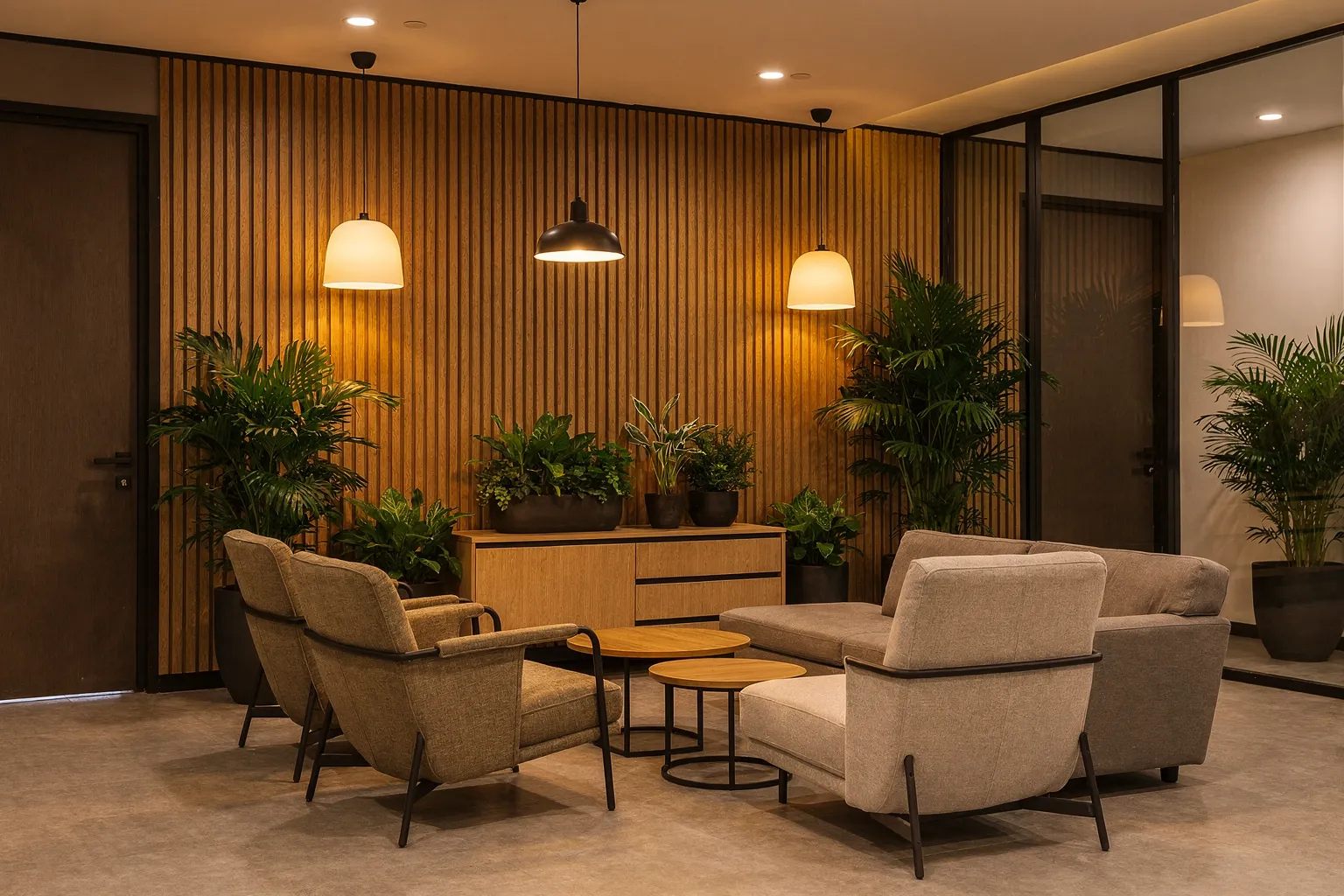
The best office fit-out contractor for your business is the one with verifiable CIDB registration, a clear single-point-of-contact design-and-build model, transparent fixed quotations, and a realistic programme that minimises disruption to your team. Judge contractors on process and accountability, not on who claims to be "number one".
Searching for the "best office fit-out contractor in Malaysia" rarely returns a single right answer, and any firm claiming to be definitively the best should be treated with caution. Fit-out is a service business: the right contractor depends on your floor area, your building's management rules, your timeline and how much risk you want to carry yourself. This guide sets out exactly what to look for so you can choose with confidence, whether you are refreshing a small suite in Petaling Jaya or building out a new headquarters floor in Kuala Lumpur.
It is written as a buyer's guide for business tenants and office managers, not a league table. Wiz Works is a Malaysian design-and-build renovation company that designs, builds and project-manages office fit-outs under one contract, so where it is relevant we explain how that model works in practice. You will still want to compare two or three firms before you commit.
What does an office fit-out contractor actually do?
An office fit-out contractor turns a bare or tired commercial space into a working office. Depending on the scope, that can mean space planning, partitions and ceilings, flooring, lighting, mechanical and electrical (M&E) works, custom carpentry and joinery, bespoke finishes, and the authority submissions and building-management approvals that sit behind all of it. The most common confusion is between a fit-out (fitting an interior to make it usable, often within an existing shell) and a wider renovation (changing or upgrading what is already there). Many Malaysian offices need a blend of both.
The market is sizeable and active. According to the Department of Statistics Malaysia, the construction sector recorded RM178.6 billion in work done in 2025, up 12.5%, with the Special trade activities sub-sector, which covers much of the interior, electrical and finishing work behind office fit-outs, growing 22.8% and non-residential buildings up 16.3% (DOSM, Construction Statistics Q4 2025). A healthy market is good news, but it also means quality and reliability vary widely between firms.
Should I choose design-and-build or separate designer and contractor?
This is the most important decision you will make, and it shapes everything else. There are two broad routes.
- Separate (traditional) route: you appoint an interior designer to produce drawings, then tender those drawings to one or more contractors who build to them. You hold both contracts and coordinate between them.
- Design-and-build route: a single firm both designs and constructs the office under one contract. You have one point of accountability from the first sketch to the day you move in.
For most businesses, especially those without an in-house projects person, design-and-build is simpler and reduces the finger-pointing that happens when something on site does not match the drawing. Because the same team owns the design and the build, the budget is set against buildable details rather than an idealised drawing, and changes are resolved by one party. The separate route can give you more design independence and competitive tendering, which suits larger or more design-led projects with a professional team to run them.
Design-and-build vs separate: quick decision guide
- Pick design-and-build if you want one contract, one point of contact, a single budget owner and the least coordination on your side.
- Pick the separate route if you want full design independence, formal competitive tendering, and you have the time and expertise to manage two parties.
- Either way, insist on a clear written scope, a fixed or clearly-staged price, and a named person who is responsible when issues arise.
We compare these two routes in more detail in our design-and-build vs traditional contractor guide, and explain the integrated model itself in our design-and-build guide for Malaysia.
How do I check a fit-out contractor is legitimate and qualified?
Before you discuss design at all, confirm the contractor is real, registered and competent to do the work. In Malaysia, contractors carrying out construction work must be registered with the Construction Industry Development Board (CIDB). Registration is mandatory under Section 25 of the relevant Act, and a contractor is not permitted to undertake a project whose value exceeds the limit attached to its registration grade (CIDB, Contractor Registration). The grading runs from G1 to G7, with each higher grade allowing higher-value projects, so it is reasonable to ask which grade a contractor holds and whether it covers the size of your job.
Beyond registration, a few practical checks separate a credible firm from a risky one.
Due-diligence checklist before you sign
- Company and registration: a valid, registered business and CIDB registration appropriate to the project value.
- A single point of contact: one named project lead who owns your job end to end, not a different person every call.
- A written, itemised quotation: scope, materials, provisional sums and exclusions all spelled out, so you are comparing like for like.
- A realistic programme: a dated schedule that accounts for design, approvals, lead times and snagging, not just "a few weeks".
- Insurance and compliance: public liability and workmen's cover, plus a clear statement of who handles building-management and authority approvals.
- How they handle variations: a transparent process for pricing changes before work proceeds, so the final bill holds no surprises.
What does an office fit-out cost in Malaysia?
Cost depends on your floor area, the quality of finishes, how much M&E and partitioning is involved, and the condition of the space you start from. Rather than quote a single figure, it is more useful to think in ranges. The table below shows indicative market guidance for the Klang Valley; it is general industry information, not Wiz Works' own rates, and your actual price should always come from a measured, itemised quotation.
| Fit-out tier | Indicative range (RM / sq ft) | Typically includes |
|---|---|---|
| Basic refresh | RM80–RM150 | Light partitioning, repainting, basic flooring and lighting, minimal M&E changes |
| Mid-range corporate | RM150–RM250 | New layout, meeting rooms, upgraded M&E, carpentry, branded finishes |
| High-end / bespoke | RM250–RM450+ | Premium materials, extensive M&E, custom joinery, smart lighting and integration |
Indicative market guidance only. Source: Kuala Lumpur office fit-out cost guide, 2025. Your quotation will differ with scope and site condition.
Two points matter when you read any cost range. First, M&E (air-conditioning, electrical, data, fire services) is usually one of the largest line items and a common place for under-quoting, so make sure it is itemised, not buried in a lump sum. Second, the cheapest quotation is rarely the best value; a low headline number often hides thin allowances that reappear as variations later. We unpack the drivers in our renovation pricing guide.
What approvals and building rules apply to an office fit-out?
Most office fit-outs sit inside a managed commercial building, which means two layers of permission. The first is the building management's own fit-out rules: most require approved drawings, a deposit, defined working hours, contractor passes and adherence to the building's M&E standards before work can start. The second is statutory: depending on the scope, electrical works fall under the purview of the Energy Commission (Suruhanjaya Tenaga), and any change affecting fire safety, escape routes or fire systems must comply with the Fire and Rescue Department's requirements (Bomba).
A capable contractor should manage these approvals for you and build them into the programme from the start. If a firm is vague about who handles submissions, treat it as a warning sign; missing or late approvals are one of the most common causes of stalled fit-outs. This coordination of authority submissions and regulatory sign-off is part of the design-and-build and project-management scope Wiz Works provides.
How do I keep my business running during the fit-out?
Disruption, not cost, is often the real worry for an operating office. The good news is that most disruption is avoidable with planning. Phasing the work so teams move in stages, scheduling noisy or dusty tasks for evenings and weekends where the building permits, and agreeing clear communication checkpoints all keep the business running. A well-run project sets these expectations in writing before work begins.
The contractors that disappoint are rarely the ones who quote highest. They are the ones who never agreed, in writing, who is responsible, what is included, and what happens when something changes.
What questions should I ask before appointing a contractor?
A short, direct set of questions will tell you more than any brochure. Ask each firm the same questions and compare the answers.
- Are you CIDB-registered, and at what grade? Does it cover a project of this value?
- Will the same person manage my project from design through to handover?
- Can I see an itemised quotation that separates M&E, partitioning and finishes?
- Who handles building-management and authority approvals, and is that time in your programme?
- How do you price and approve variations once work has started?
- What is your snagging and defects process after handover?
What are the red flags to walk away from?
- A quotation that is far lower than the others with no clear reason; the gap usually reappears as variations.
- Reluctance to put scope, price or programme in writing.
- No clear single point of accountability, or a different contact every time.
- Pressure to pay a large upfront deposit before any drawings or contract exist.
- Vagueness about CIDB registration, insurance, or who handles approvals.
Where does Wiz Works fit in?
Wiz Works is a Malaysian design-and-build renovation company that designs, builds and project-manages office fit-outs under one contract. That means a single team handles space planning and 3D visualisation, technical drawings and material selection, the M&E, carpentry, ceilings, partitions, flooring and finishes, and the authority submissions and site supervision in between, with one point of contact throughout. It serves businesses across Kuala Lumpur, Petaling Jaya, Shah Alam, Selangor, the wider Klang Valley and Malaysia. You can see the full scope on our services page and the dedicated office renovation and fit-out overview, and browse common questions in our renovation FAQs.
Choosing well comes down to the same few things every time: a registered, accountable firm; a clear scope and price; a realistic programme; and a model that suits how much you want to manage yourself. If you would like to talk through an office fit-out, whether you are still scoping the brief or ready to plan a programme, message Wiz Works on WhatsApp at +60 12-391 5319 and we will help you think it through.